Address
304 North Cardinal
St. Dorchester Center, MA 02124
Work Hours
Monday to Friday: 7AM - 7PM
Weekend: 10AM - 5PM
Address
304 North Cardinal
St. Dorchester Center, MA 02124
Work Hours
Monday to Friday: 7AM - 7PM
Weekend: 10AM - 5PM
India is one of the world’s oldest and most respected textile-producing countries. From traditional handwoven fabrics to modern large-scale garment factories, the Indian textile industry has evolved into a global manufacturing powerhouse. Today, India supplies fabrics and garments to both domestic and international markets, supporting millions of jobs and contributing significantly to the country’s economy.
Textile manufacturing is not just about producing clothes. It is a detailed process that involves fiber selection, yarn production, fabric creation, garment construction, quality control, and final finishing. Understanding this process helps buyers, brands, and businesses make better sourcing decisions.
At Bharath Textiles, textile manufacturing is approached with a strong focus on quality, consistency, and long-term value. This guide explains how textile manufacturing works in India and why the country continues to be a trusted destination for apparel production.
India’s textile industry is one of the largest in the world. It covers the entire value chain, starting from raw fiber production to finished garment exports. The industry includes cotton farming, spinning, weaving, knitting, processing, dyeing, printing, and garment manufacturing.
India is among the world’s leading producers of cotton, which gives manufacturers easy access to high-quality raw materials. Along with cotton, India also produces polyester, viscose, blends, and specialty fabrics used in various clothing categories.
The strength of Indian textile manufacturing lies in its combination of skilled labor, modern machinery, competitive pricing, and decades of experience. This balance allows manufacturers to deliver both large bulk orders and customized clothing solutions.
Textile manufacturing is the process of converting raw fibers into finished fabrics and garments. It involves several stages, each playing a critical role in the final quality of the product.
The process includes:
Fiber selection
Yarn manufacturing
Fabric production
Fabric processing and finishing
Garment manufacturing
Quality inspection and packaging
Every stage must be carefully controlled to ensure durability, comfort, color stability, and consistency in bulk production.
The manufacturing process begins with choosing the right fiber. Fibers determine how the final fabric will feel, perform, and last.
Common fibers used in India include:
Cotton
Polyester
Viscose
Lycra blends
Organic cotton
Cotton remains the most preferred fiber due to its breathability, softness, and comfort, especially for Indian and international climates.
At Bharath Textiles, fiber selection is done based on fabric usage, customer requirements, and quality standards to ensure consistent results.
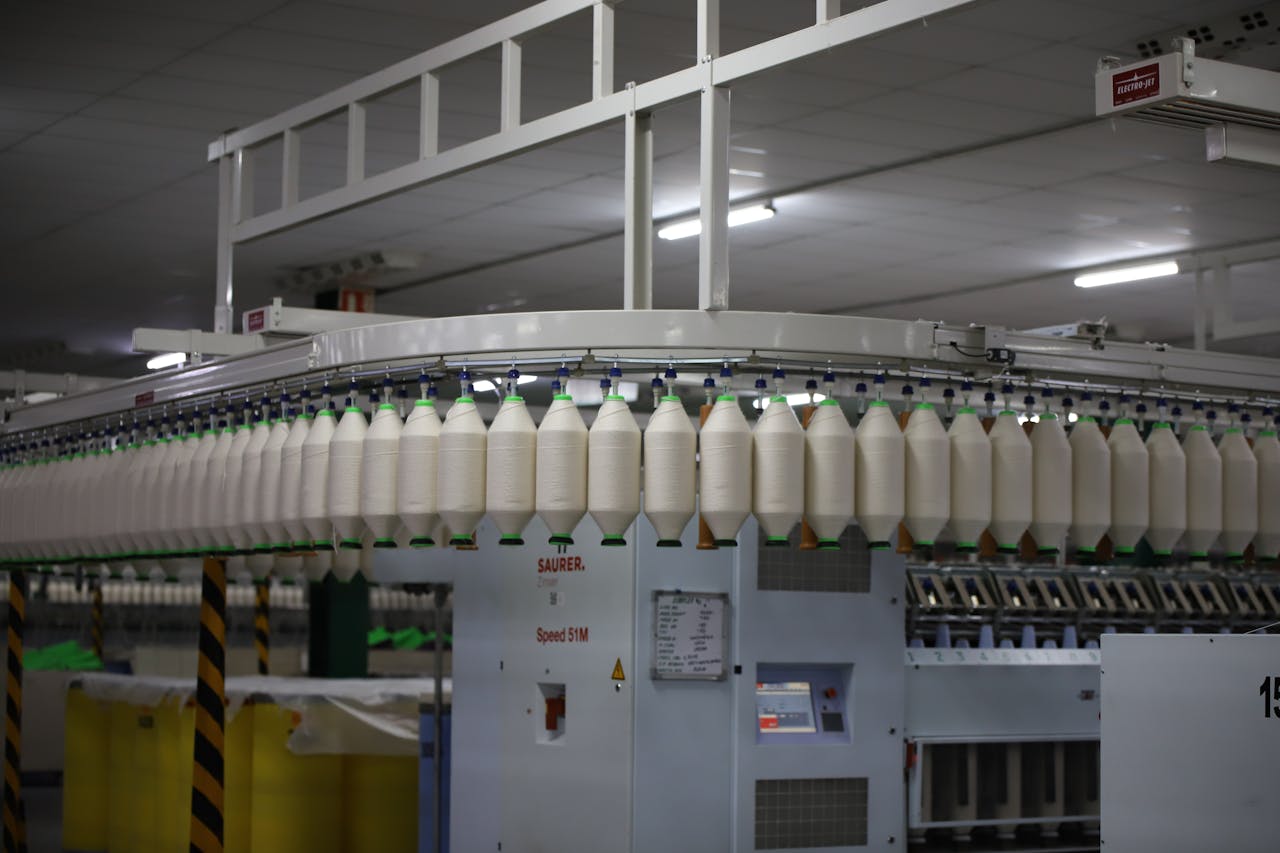
Once fibers are selected, they are converted into yarn through spinning. Spinning aligns fibers together to create strong, uniform threads.
Types of yarn include:
Carded yarn
Combed yarn
Compact yarn
Combed yarn is commonly used for premium garments as it removes short fibers, resulting in smoother and stronger fabric.
Yarn quality directly affects fabric strength, pilling resistance, and garment lifespan.
After yarn production, fabric is created using weaving or knitting methods.
Produced using looms
Suitable for shirts, trousers, uniforms, and formal wear
Produced using knitting machines
Used for t-shirts, sportswear, innerwear, and casual clothing
Knitted fabrics are known for stretch and comfort, while woven fabrics offer structure and durability.
Raw fabric cannot be used directly for garments. It must go through processing to improve appearance, feel, and performance.
Processing includes:
Desizing
Scouring
Bleaching
Dyeing
Printing
These treatments ensure the fabric is clean, evenly colored, and suitable for garment production.
Color consistency and dye quality are especially important for bulk manufacturing, where shade variation must be minimal.
Finishing improves the fabric’s final characteristics.
Common finishing processes include:
Bio-washing
Softening
Anti-pilling treatment
Shrinkage control
Heat setting
Bio-washing is widely used to improve softness and remove surface fibers, resulting in premium-quality fabric.
Once fabric is ready, it moves into garment production.
Patterns are templates used to cut fabric accurately. Proper pattern design ensures correct fitting, size consistency, and minimal fabric wastage.
Fabric layers are spread and cut according to approved patterns. Precision in cutting is critical, as small errors can affect sizing and alignment.
Cut panels are stitched together using industrial sewing machines. Skilled operators ensure seam strength, finishing quality, and shape accuracy.
Garments may be washed to improve softness, remove impurities, or achieve specific effects. Final finishing includes thread trimming, ironing, and shaping.
Each garment is checked for:
Stitch defects
Measurement accuracy
Fabric flaws
Color consistency
Only approved garments proceed to packing.
Garments are folded, packed, labeled, and prepared for shipment based on buyer requirements.
Quality control is essential in maintaining trust and consistency. It ensures:
Uniform sizing
Long-lasting fabric performance
Minimal returns
Export compliance
At Bharath Textiles, quality checks are performed at multiple stages — from raw material inspection to final packaging.
India remains a global textile leader due to:
Abundant raw materials
Skilled workforce
Modern production facilities
Competitive manufacturing costs
Strong export infrastructure
Government support
Indian manufacturers can handle both mass production and customized orders efficiently.
Bharath Textiles operates with a clear focus on quality, affordability, and reliable manufacturing. The company supports:
Bulk garment production
Custom manufacturing
Private label requirements
Domestic and export supply
By combining traditional expertise with modern processes, Bharath Textiles delivers garments that meet both market demand and quality expectations.
The future of Indian textile manufacturing is moving toward:
Sustainable materials
Eco-friendly processing
Energy-efficient production
Responsible sourcing
Technology-driven operations
Manufacturers that adapt to these changes will lead the global market.
Textile manufacturing in India is a well-structured process built on experience, innovation, and craftsmanship. From fiber to finished garment, every stage contributes to the quality of the final product.
With strong infrastructure and skilled professionals, India continues to serve as a reliable sourcing destination for global apparel needs. Companies like Bharath Textiles play an important role by delivering consistent quality, ethical manufacturing, and long-term value to buyers.
Understanding the manufacturing process helps brands and businesses make informed decisions and build successful partnerships.